
Choosing sculpting clay
Water clay, oil clay, polymer clay, and wax-based compounds behave differently because they are built for different jobs.
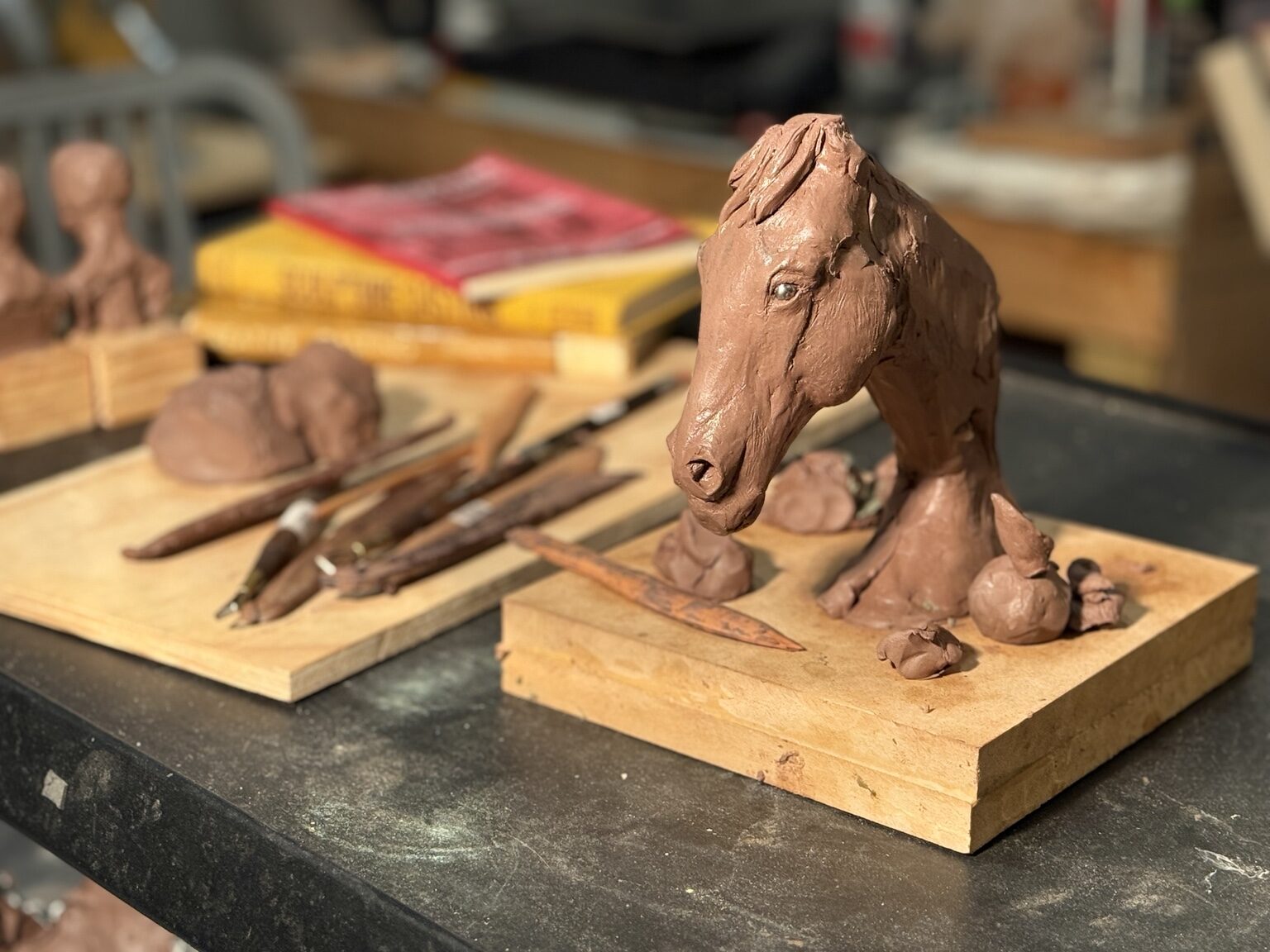
Clay is not one material. It is a family of materials that hold particles in a workable binder. The binder determines whether the clay dries, stays workable, cures with heat, or can be melted and reused.
The main families
Water-based ceramic clay is mineral clay mixed with water. It is responsive, inexpensive, and excellent for fast studies and large modeling, but it dries and shrinks. Keep it damp, plan for cracks, and understand that a thick solid mass should not be fired as-is.
Oil-based clay replaces water with oils and waxes, so it does not dry. Sulfur-free varieties are safer around platinum silicone. Polymer clay contains plasticizers and cures in an oven; it suits small finished objects and detailed maquettes. Sculpting waxes and wax-clays can be carved, warmed, and prepared directly for investment casting.
Choose backward from the next step
Ask what the model must do. Is it a one-hour study, a months-long portrait, a finished object, or a pattern for silicone? Consider scale, room temperature, desired surface, armature, silicone compatibility, and shipping.
The best clay is not the one another sculptor prefers. It is the one whose working behavior supports the next operation without making you fight it.