
Sculpting tools: the whole nine yards
Rakes, loops, ribs, knives, calipers, and improvised tools each leave a different kind of evidence in clay.
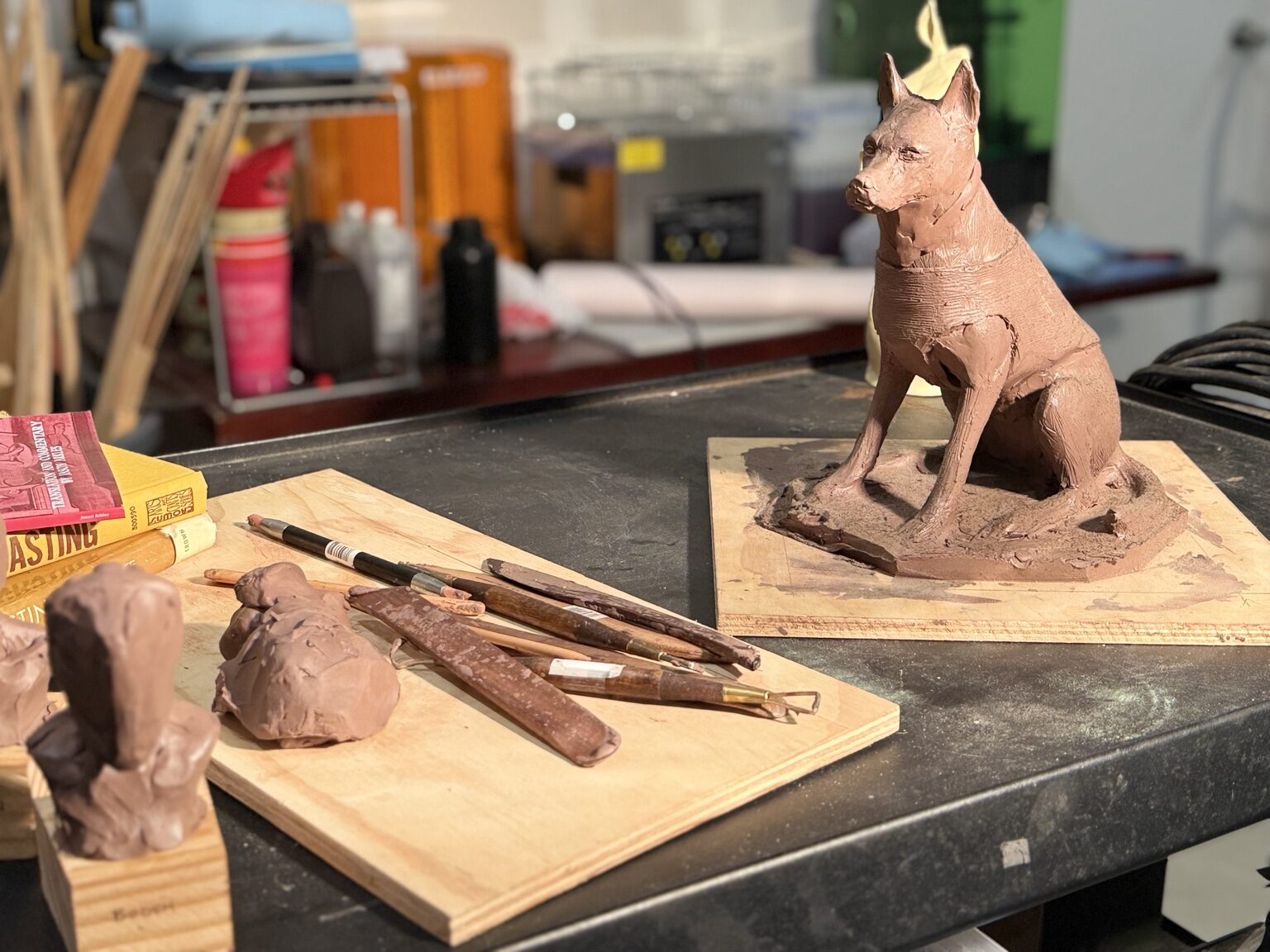
A sculpting tool is an extension of the hand. The point is not to own every shape in the catalog; it is to understand what kind of mark each tool makes and when that mark helps the form.
The working set
Loop tools remove material cleanly. Rakes use teeth to knock down lumps, bridge additions, and unify a surface without polishing too early. Ribs—wood, metal, rubber, or silicone—compress broad areas. Knives divide planes and trim edges. Modeling tools push and articulate smaller forms.
Calipers compare proportions. Plumb lines and mirrors catch alignment problems. Brushes, sponges, solvent, and texture stamps affect the skin. Wire cutters separate work from boards and slice clay for inspection.
Make what you need
Some of the best tools are bent wire, brass tubing, sharpened hardwood, looped guitar string, cut credit cards, and modified dental tools. Custom tools solve repeated problems better than a giant generic kit.
Work large to small. Establish mass with hands and broad tools, organize planes with rakes and ribs, then earn the right to use tiny tools. A surface finished too early becomes something you are afraid to change.