
Studio setup for actual work
Build the room around movement, mess, ventilation, storage, and the work you perform most often.
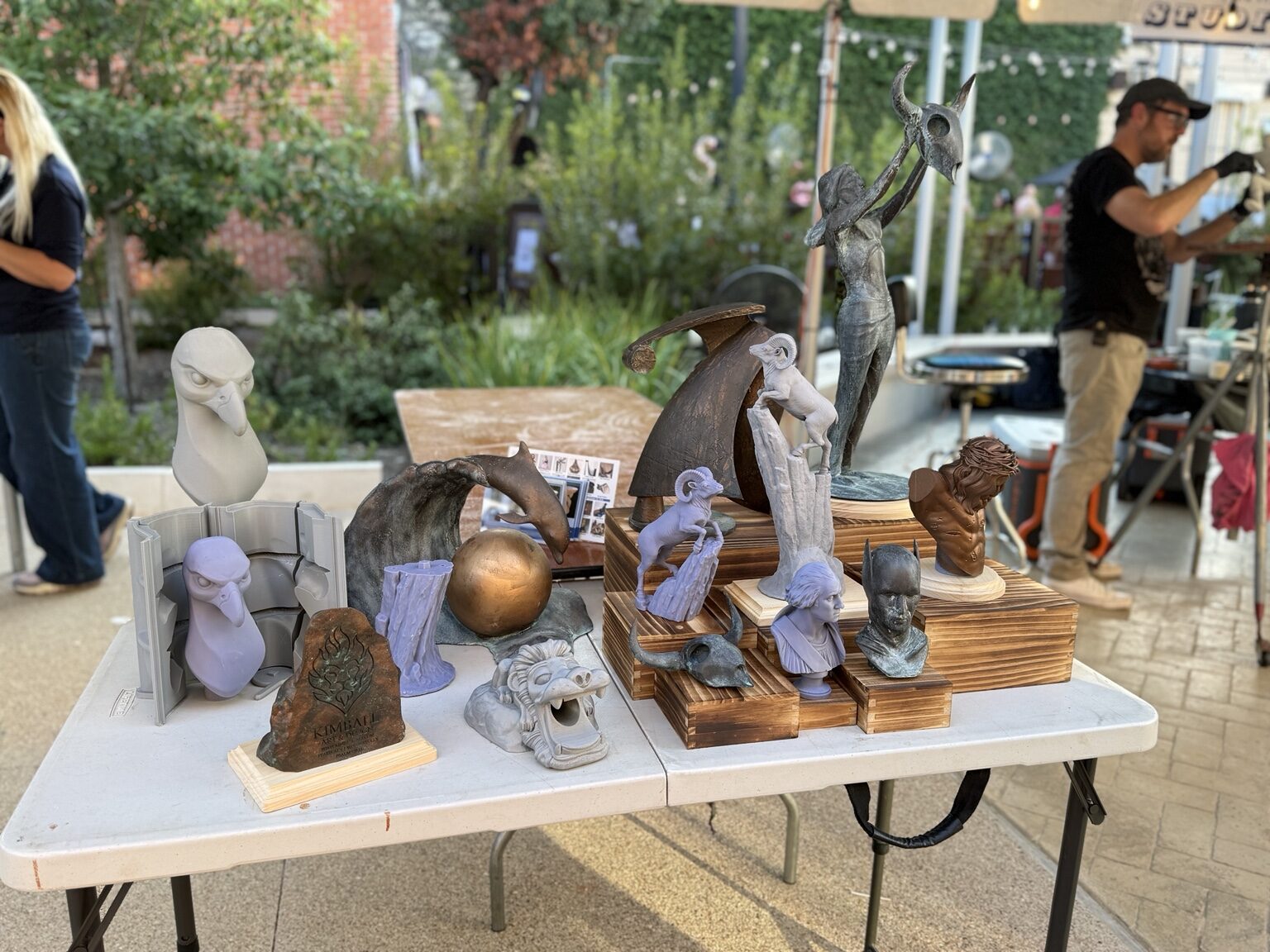
A useful studio does not need to look impressive. It needs to make the next right action easy. Separate clean work, dusty work, chemical work, and hot work as much as the space allows.
Build zones, not clutter
Give modeling a stable stand with access from every side and movable light. Put printing and scanning where vibration, glare, and traffic can be controlled. Keep resin washing and chemical finishing in ventilated areas with spill containment. Grinding, sanding, plaster, and investment create dust that should not migrate onto computers or finished work.
Use vertical storage, labeled bins, rolling carts, and a place for work in progress. Store heavy material low. Keep daily tools visible; archive specialty tools instead of covering every surface.
Protect the artist
Plan power, ventilation, lighting, fire safety, eyewash access, and waste handling before buying another machine. Do not make a respirator compensate for a room that needs extraction. Keep incompatible chemicals apart.
Leave open floor space. Sculpture grows, crates arrive, molds spread out, and a solo artist needs room to move without turning every operation into a rearrangement project.