
Patina: color made on metal
Patina is controlled chemistry, heat, layering, and judgment—not bronze-colored paint pretending to be metal.
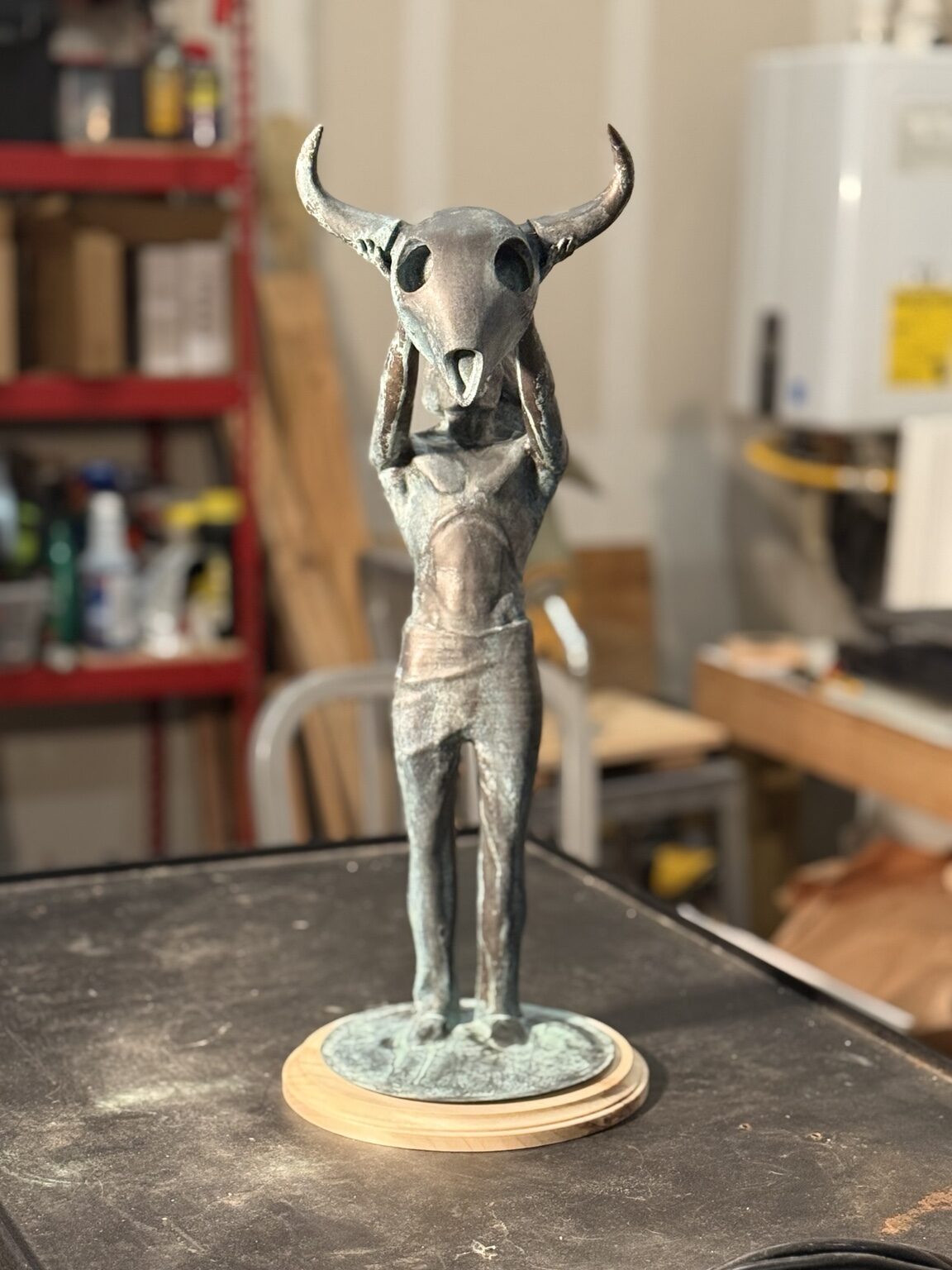
A patina is surface coloration produced when chemicals react with metal. Bronze naturally changes as it meets oxygen, moisture, salts, and pollutants. A patineur accelerates and controls those reactions while keeping the metal visible.
How it is built
The casting is chased, cleaned, and degreased first. Chemicals may be brushed, sprayed, dabbed, or applied as fumes. Heat often controls reaction speed. Color is built in passes, with rinsing, rubbing back, and selective reapplication.
Ferric nitrate commonly produces warm browns and reds. Liver of sulfur can darken bronze. Cupric compounds can create greens and blue-greens. Recipes are only a starting point: alloy, texture, humidity, temperature, concentration, and the hand all change the result.
The finish is part of the sculpture
A good patina supports planes, depth, and intent. Too much opaque color can flatten a surface. Wax or another coating slows change, but no outdoor patina is maintenance-free.
Patina chemicals and heated metal require ventilation, protective equipment, and proper handling. Learn with experienced supervision, not from a recipe copied without context.