
What makes a sculptural portrait work
Likeness matters, but a portrait becomes convincing through structure, character, gesture, and the way it holds up from every angle.
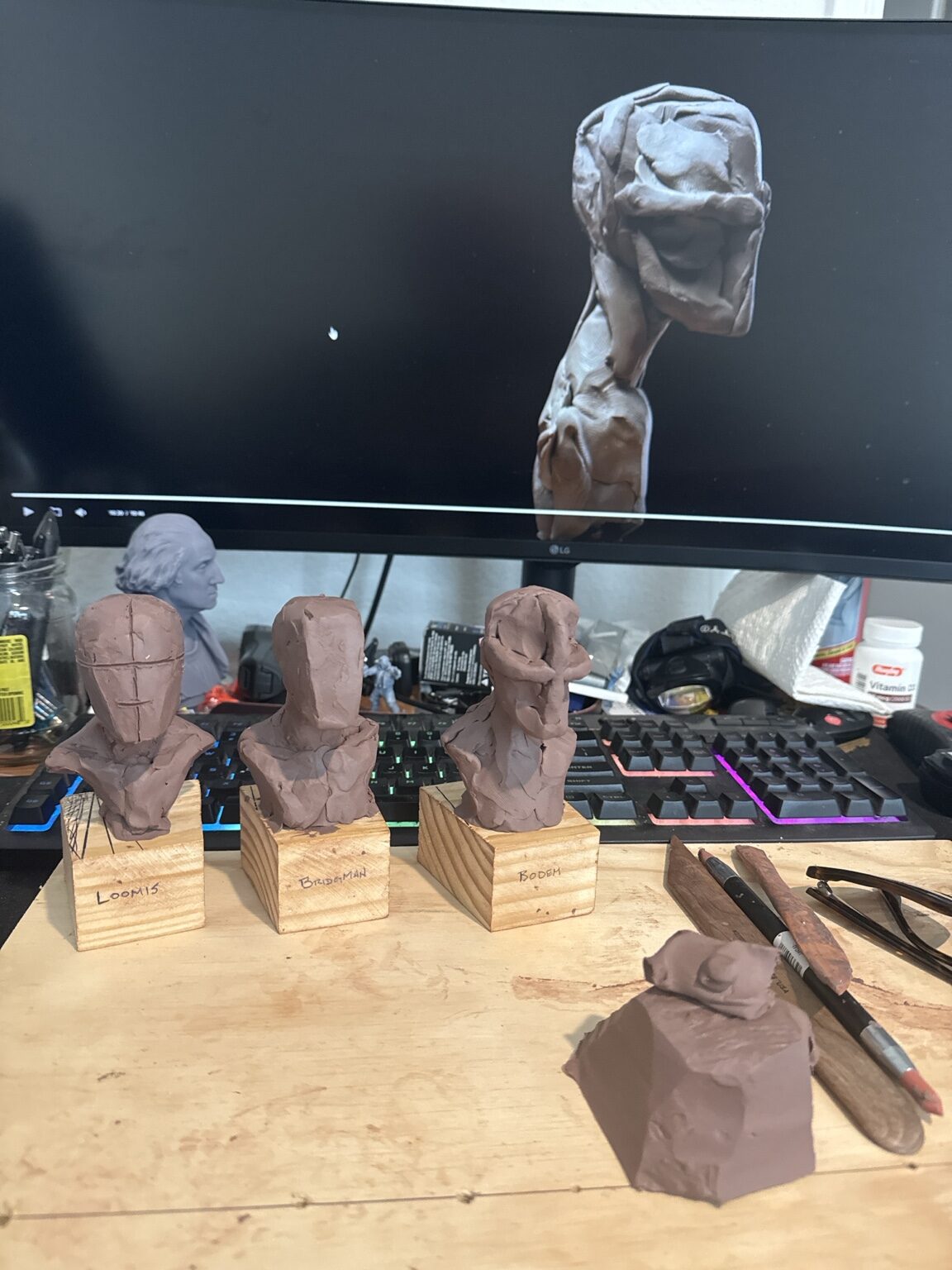
A recognizable face is not automatically a successful portrait. Measurements can be accurate while the person still feels absent. A sculptural portrait must organize anatomy, proportion, expression, posture, and surface into one believable presence.
Likeness lives in relationships
The distance between features matters, but so do the tilt of the head, the weight of the eyelids, the rhythm of the profile, and the transition from skull to neck. These relationships often carry more identity than isolated details.
That is why the work is viewed from across the room, in silhouette, under changing light, and from angles no single reference photograph can provide.
Character without caricature
A portrait should say something true without exaggerating the subject into a symbol. Conversation, video, familiar gestures, and stories from people who know the subject can reveal what a formal photograph leaves out.
The goal is not to freeze one expression. It is to make a still object feel capable of the expressions and presence people remember.
Finish serves the person
A highly polished surface is not inherently more complete than a visibly modeled one. Texture, edge, material, scale, and patina should support the subject and the setting.
The best decisions are made around the purpose of the portrait: intimate, familial, commemorative, memorial, or public.