Working with and casting metal
Alloy, temperature, mold design, feeding, shrinkage, chasing, welding, and finish determine whether a pour becomes sculpture.
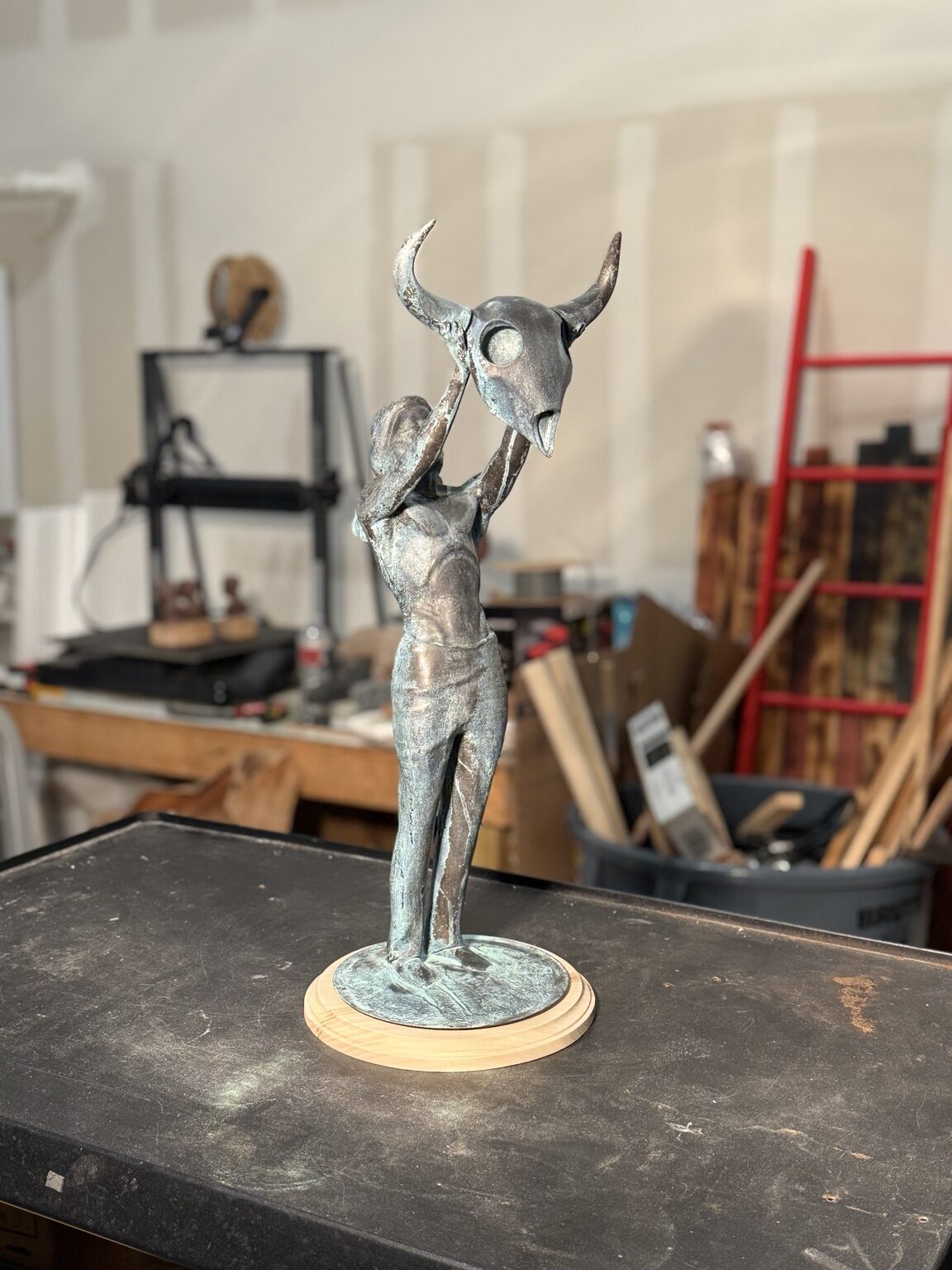
Casting begins before the furnace. Pattern, gating, mold, alloy, section thickness, and finishing plan determine how molten metal must travel and solidify.
Metal moves and shrinks
Bronze, aluminum, iron, and other alloys differ in fluidity, melting range, shrinkage, strength, corrosion, and finishing. Gates deliver metal; runners distribute it; risers feed contraction; vents release gases. Poor design creates cold shuts, misruns, porosity, inclusions, hot tears, or sink.
Large bronze is commonly cast in sections. Pieces are cut from the tree, blasted, fitted, welded, chased, and patinated. The goal is to restore intended form and surface across every joint.
Foundry work is team work
Molten metal combines extreme heat, heavy equipment, fumes, stored energy, and irreversible timing. Training, protective equipment, dry tools, engineered ventilation, inspected lifting gear, and established procedures are non-negotiable.
For most artists, close collaboration with a qualified art foundry is sensible. Understanding improves design and communication; reading does not replace foundry experience.